There is a particular quality to the light in Campeche's historic center. The way it enters through a doorway at dawn, falls on a hand-pressed tile floor and fragments into something almost ceremonial. It is not accidental. It is the product of a building tradition more than three centuries old.
At Casonas MX, we live inside that tradition. Each of our colonial houses is a study in the architectural vocabulary of New Spain: thick limestone masonry walls, central courtyards open to the sky, barrel vaults, and hand-pressed mosaico de pasta floors.
The wall as architecture
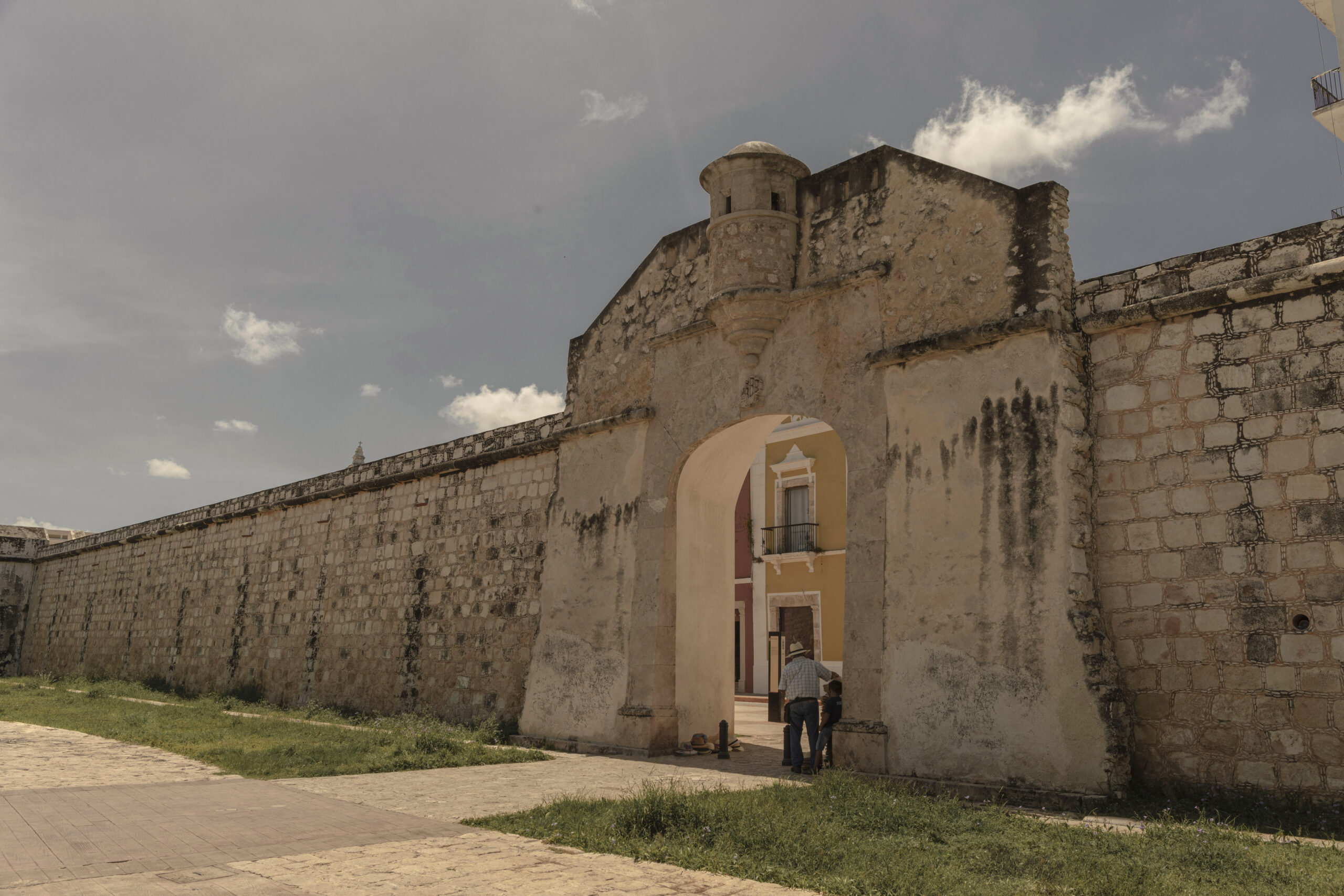
The walls of a Campeche colonial house are not partition dividers. They are structural elements of mampostería — a composition of limestone, shell aggregate, and lime mortar — that can reach 80 centimeters in thickness. Interiors remain 4 to 6°C cooler than the exterior without mechanical air conditioning.

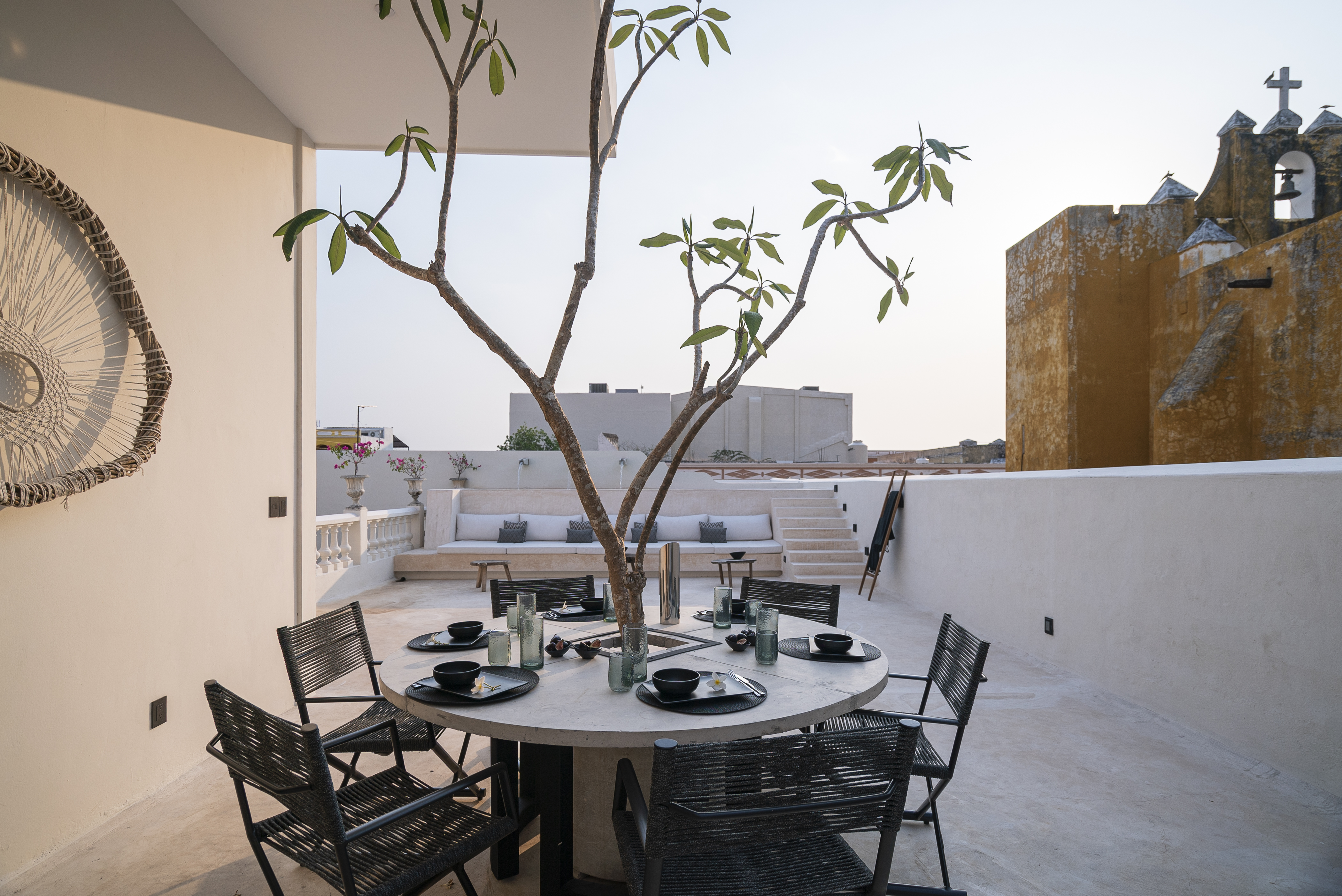
Restored colonial house with private pool in Campeche | Casonas MX
The courtyard as living room
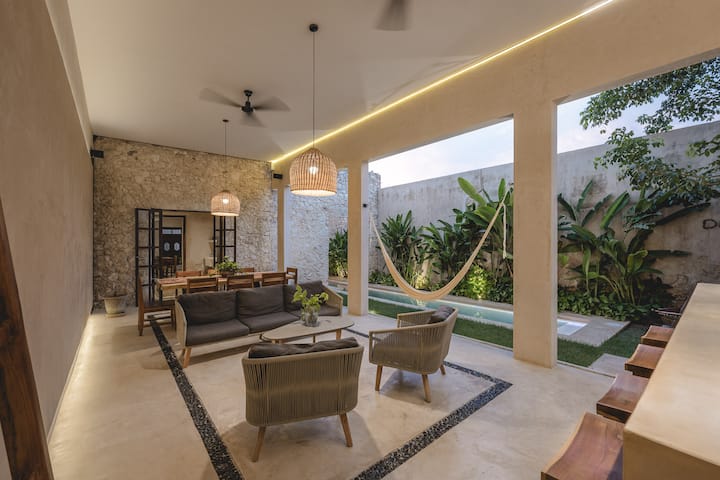
The organizing principle of every Campeche colonial house is the central courtyard. Surrounded by arcaded corridors (portales), it functions as the lungs of the structure: it captures the breeze, diffuses light, and provides that ambient sound — water, birds, leaves — that no designed acoustic environment can fully replicate.

Restored colonial house in the historic center of Campeche | Casa Verde | Casonas MX
The floor as document
The hand-pressed mosaico de pasta — cement-based tiles produced with pigmented hydraulic compounds pressed in brass molds — was installed in the finest houses of Campeche from the late 19th century onward. No two tiles are exactly alike.


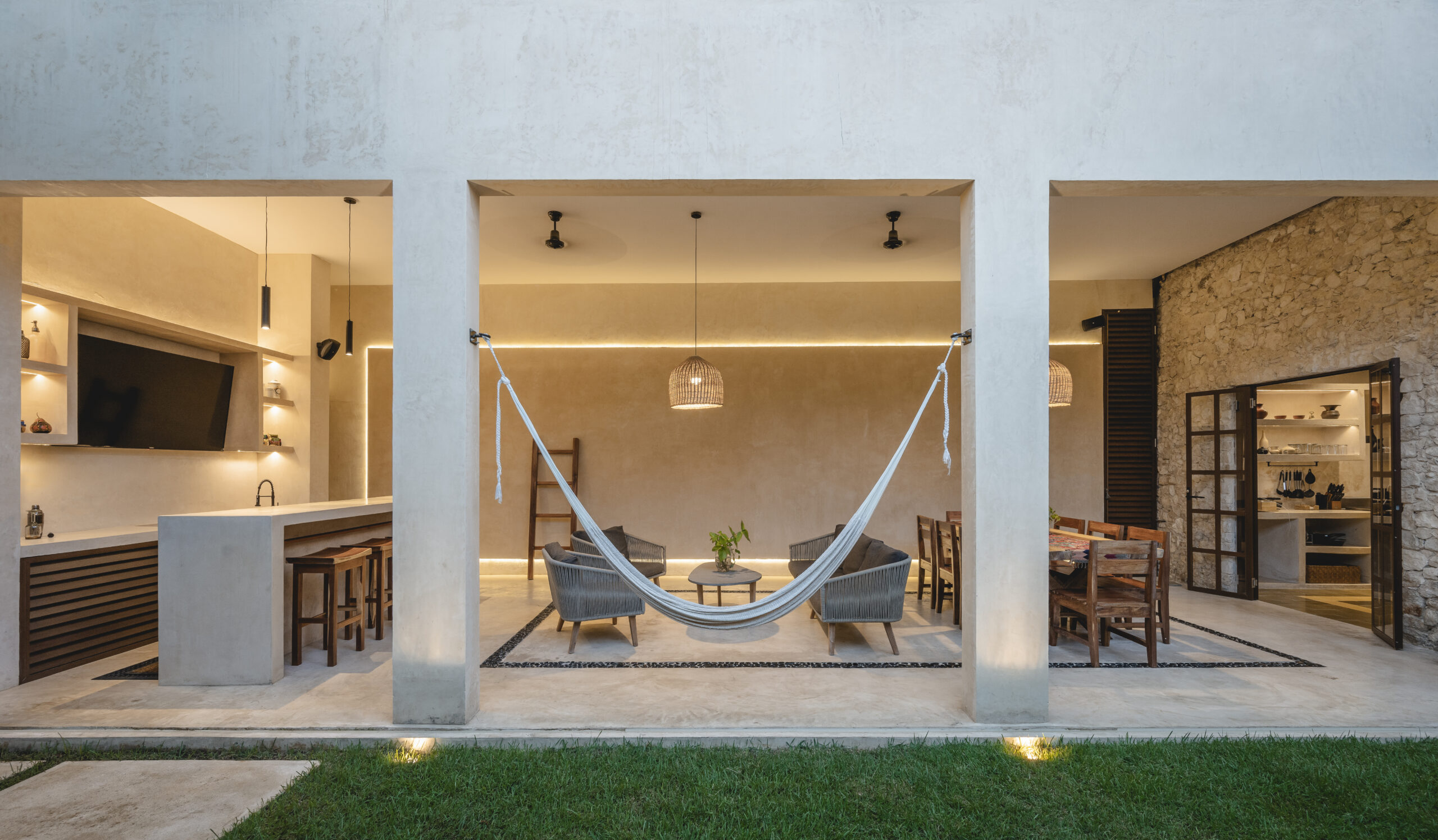
Colonial stay in Campeche with original pasta tile floors | Casonas MX
The ceiling as ambition
Colonial builders in Campeche worked in two dominant ceiling registers: the barrel vault — built in brick and lime — and the flat slab with exposed wooden beams. The ceilings of Casonas MX were built to outlast their builders.

Casa Verde: rest between stone, light and memory
The facade as conversation
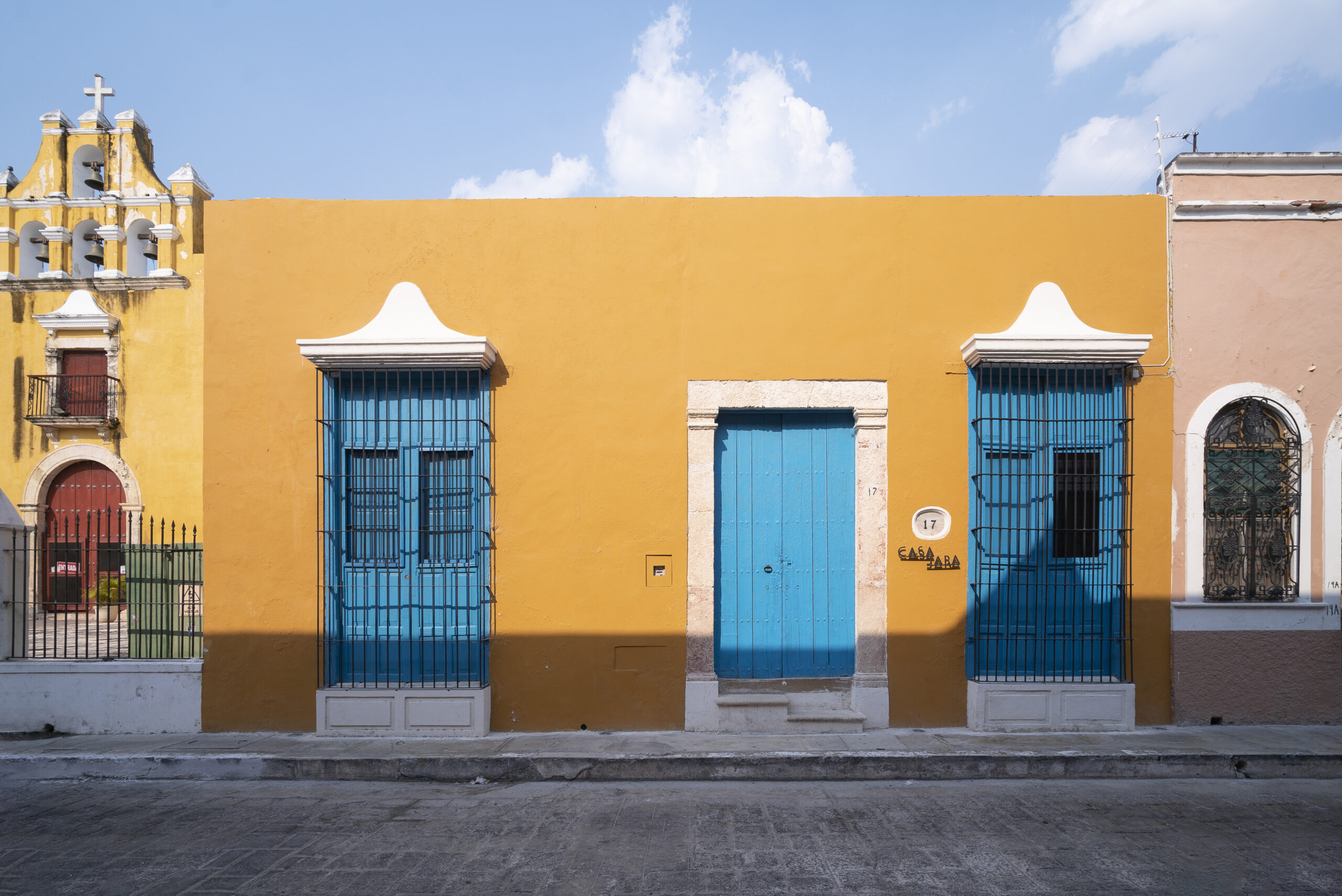
The Historic Center of Campeche is one of the most chromatically distinctive urban environments in the Americas. The INAH maintains strict guidelines on approved facade color palettes for the protected zone — the same one that received the UNESCO World Heritage designation in 1999 — the ochres, terracottas, yellows, and deep blues that give the city its photographic signature.

Staying inside the architecture
The Casonas MX experience is inseparable from these architectural facts. You are not beside the history of this city. You are inside it — sleeping in rooms whose vaults have stood for two hundred years, walking over floors laid by craftsmen whose names no one recorded.
The houses we describe are the houses you can stay in.
Stay Inside the Architecture