Campeche is a city that rewards those who look slowly. At first glance it draws you in with its walls, its bastions, and its colorful facades. But its real architectural richness emerges when you understand the relationship between street and interior: tall doors, hidden courtyards, thick walls, deep shadows, and houses that carry the memory of several centuries.
For travelers interested in architecture, Campeche offers an experience unlike anything else in Mexico. It doesn't have the accelerated pace of larger destinations or the visual overload of bigger cities. Its scale invites walking, observing, pausing — and understanding how heritage is woven into everyday life.
Casonas MX was born from the same sensibility: restoring and inhabiting historic houses not as museum pieces, but as living spaces of hospitality.
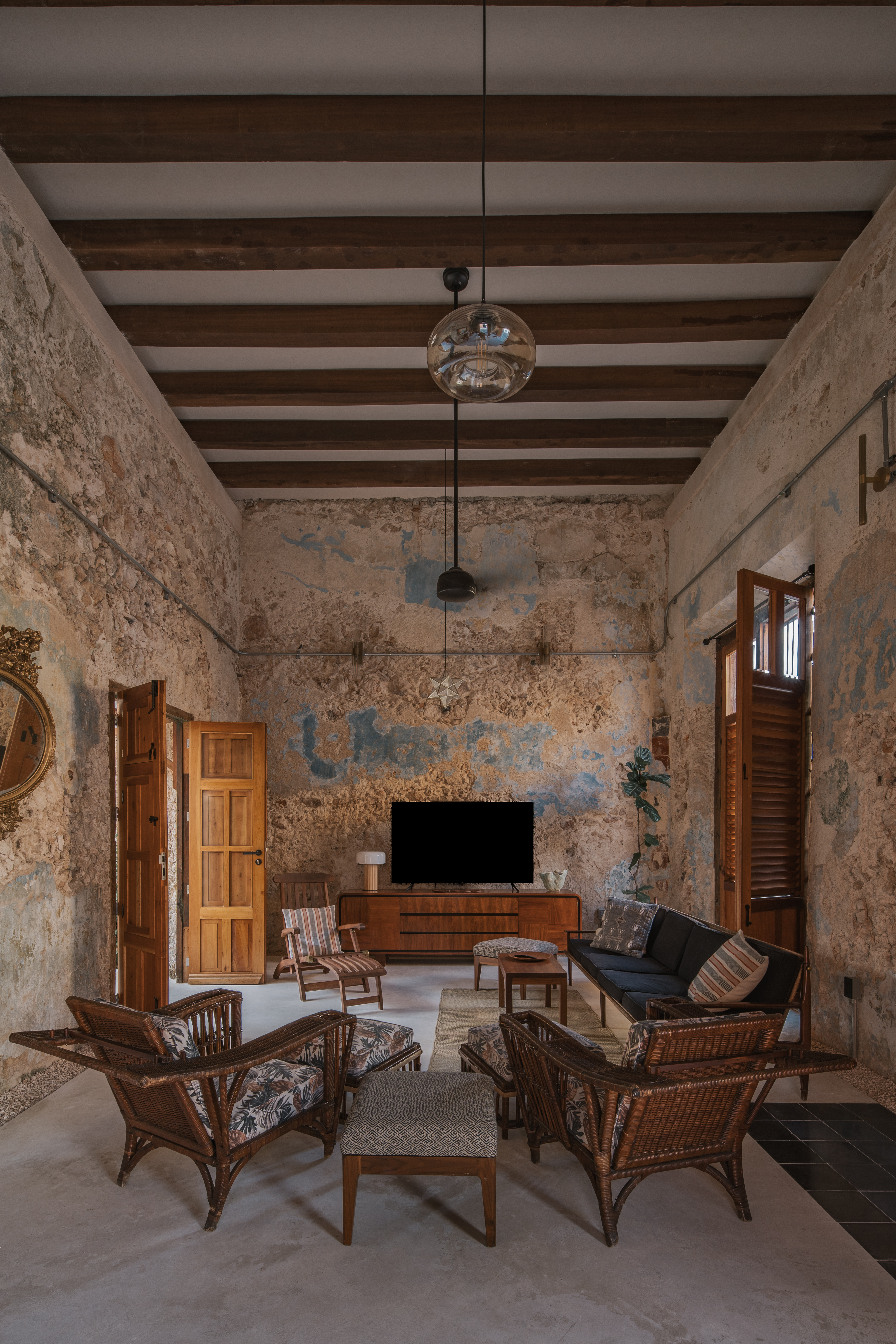
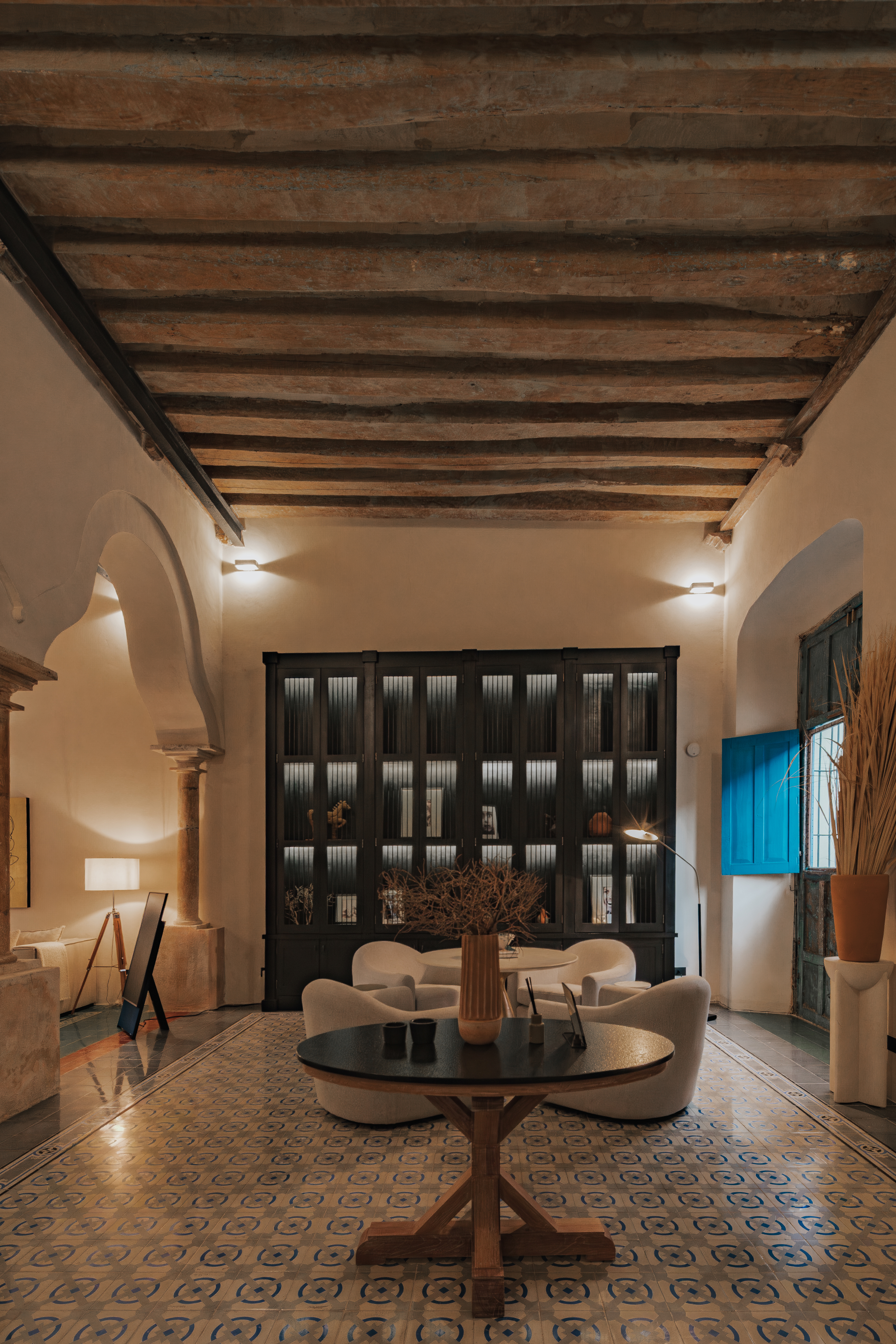
Interior of Casa Zotz — original stone walls and wooden beams
A Fortified City with Its Own Identity
Campeche was inscribed by UNESCO as the Historic Fortified Town of Campeche in 1999. Its heritage value is rooted in its urban layout, its defensive architecture, and the preservation of its historic center.
The walls and bastions speak to the city's maritime and defensive past. But Campeche's architecture is not limited to its fortifications — it is also expressed in its houses, plazas, churches, facades, and interior courtyards.
That combination of walled city and domestic life is one of the reasons Campeche is so compelling for architecture travelers. It is one of the few places in the Americas where an entire colonial fortified urban system — streets, gates, walls, and domestic architecture — has survived together as a coherent whole.
The Quiet Beauty of Campechean Houses
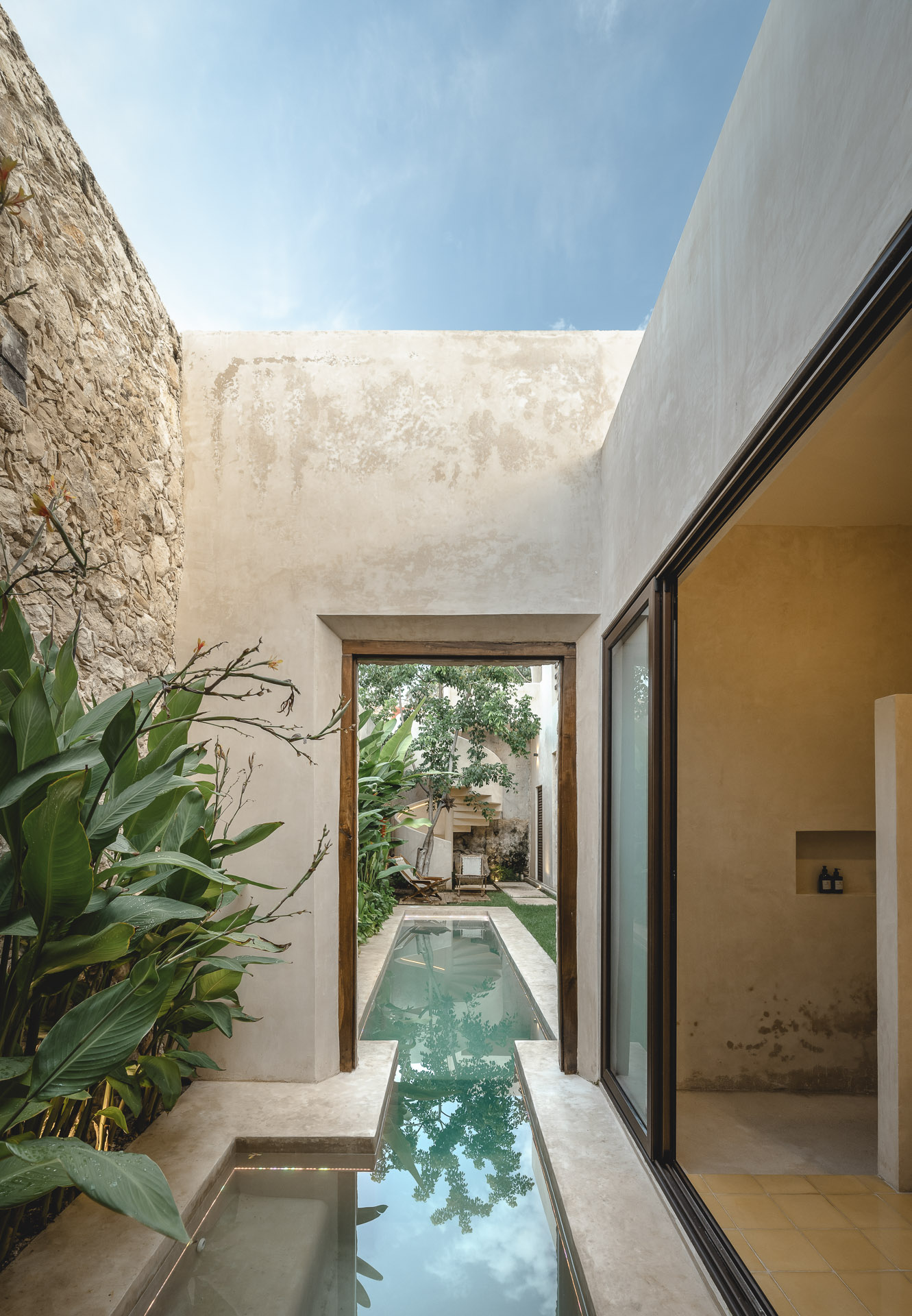
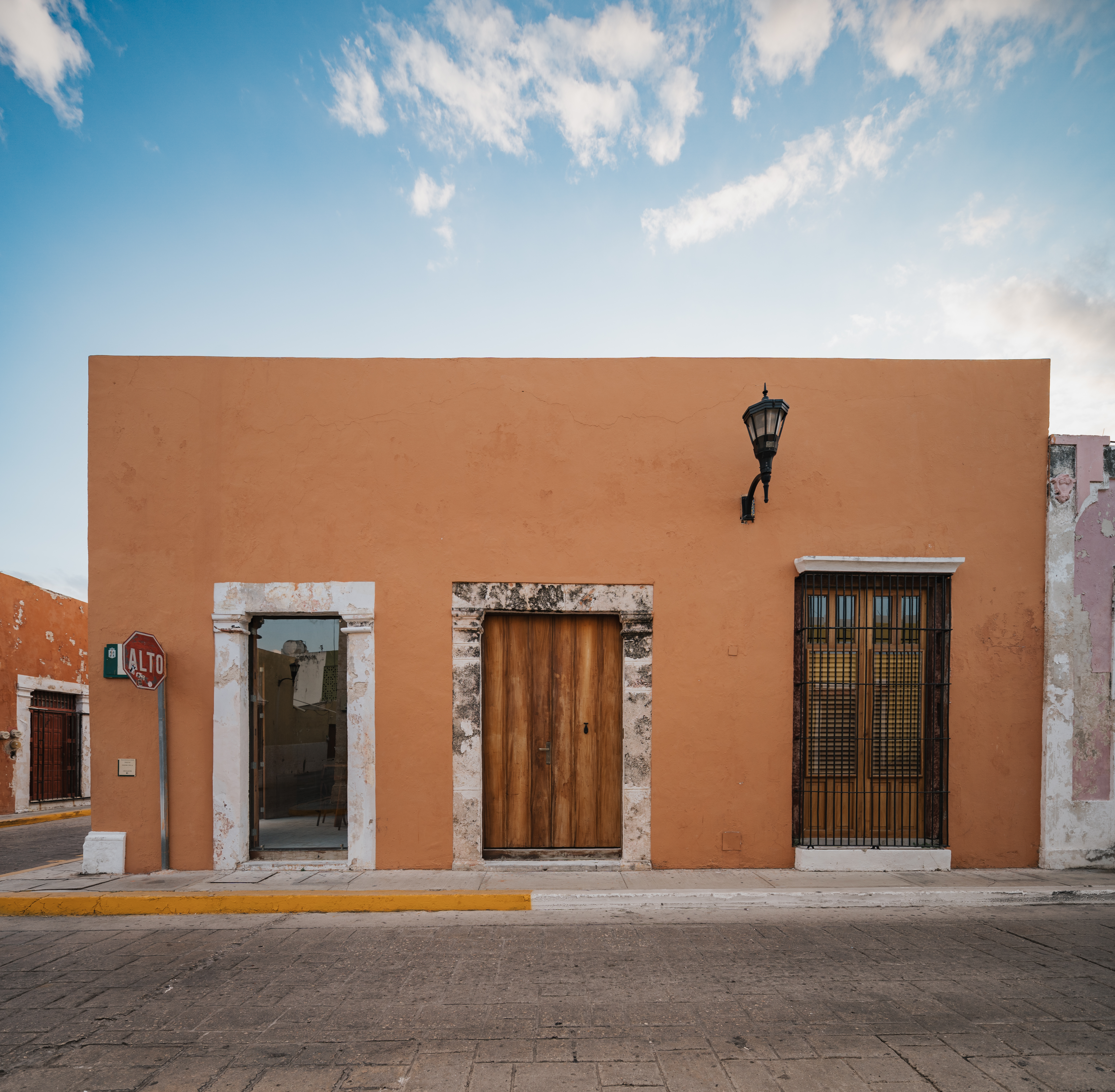
Many of Campeche's historic houses are understated toward the street and generous toward the interior. From outside, a facade may appear contained; once you cross the threshold, tall ceilings, old floors, corridors, courtyards, vegetation, stone walls, and carpentry details come into view.
This architecture responds to climate, history, and the city's ways of life. Courtyards help ventilate, thick walls protect against heat, shadows create pauses, and interior spaces generate privacy.
For a traveler attuned to design, staying in a restored house means understanding these decisions through daily experience. Looking at a house and living in one are fundamentally different things.
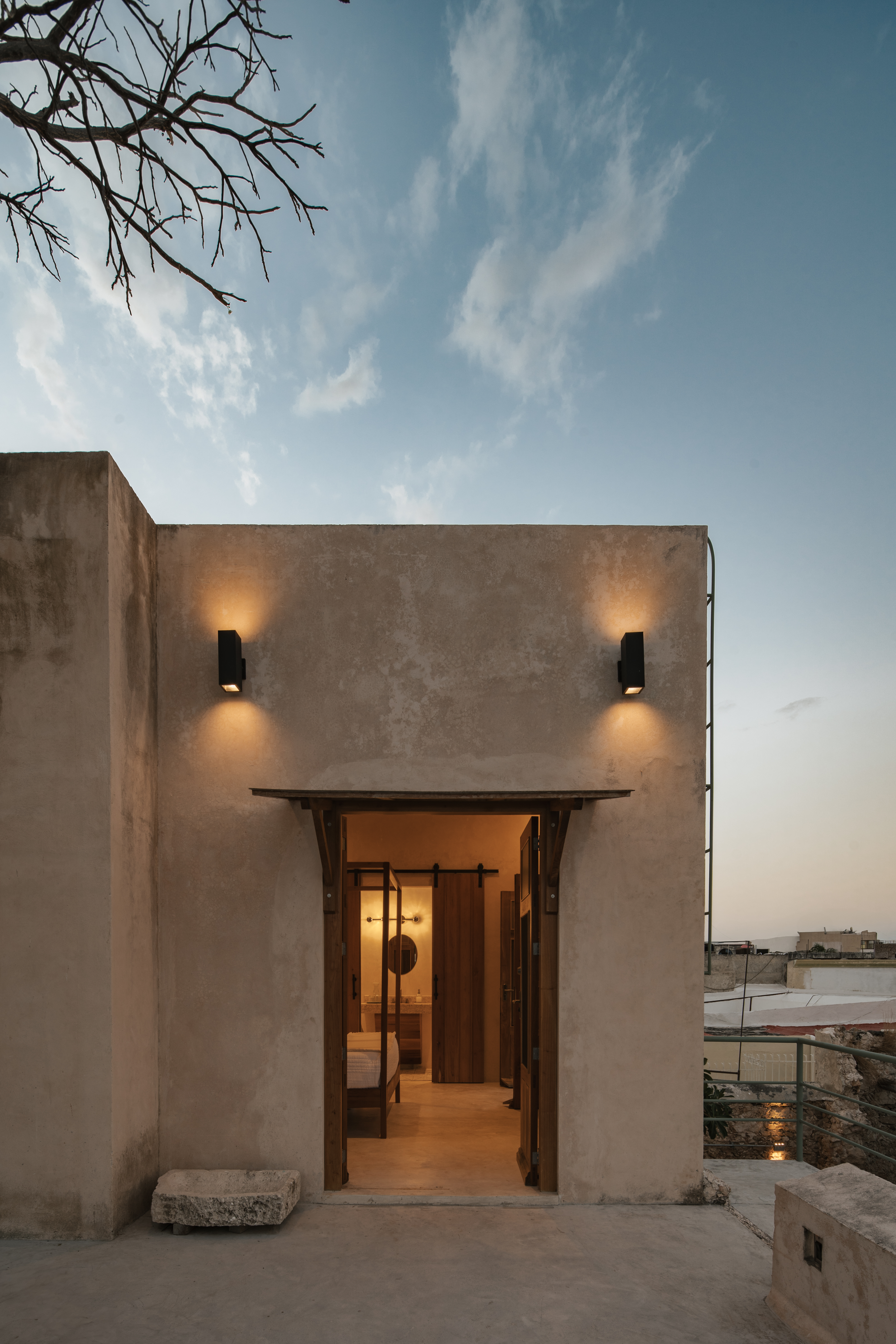
Colonial interior arch — Casa Zotz by Casonas MX
Restoration Is Not Erasure
Good heritage restoration does not mean making an old house look new. It means allowing it to remain alive without losing its character.
This requires careful decisions: what to preserve, what to reinforce, what to reinterpret, and what contemporary elements to integrate. A historic house needs comfortable bathrooms, quality beds, climate control, and modern services — but it also needs to retain its proportions, its textures, and its atmosphere.
The challenge is avoiding two extremes: frozen nostalgia and memory-less modernization. Casonas MX works from that middle ground — offering boutique comfort without erasing the architectural identity that makes each home irreplaceable.
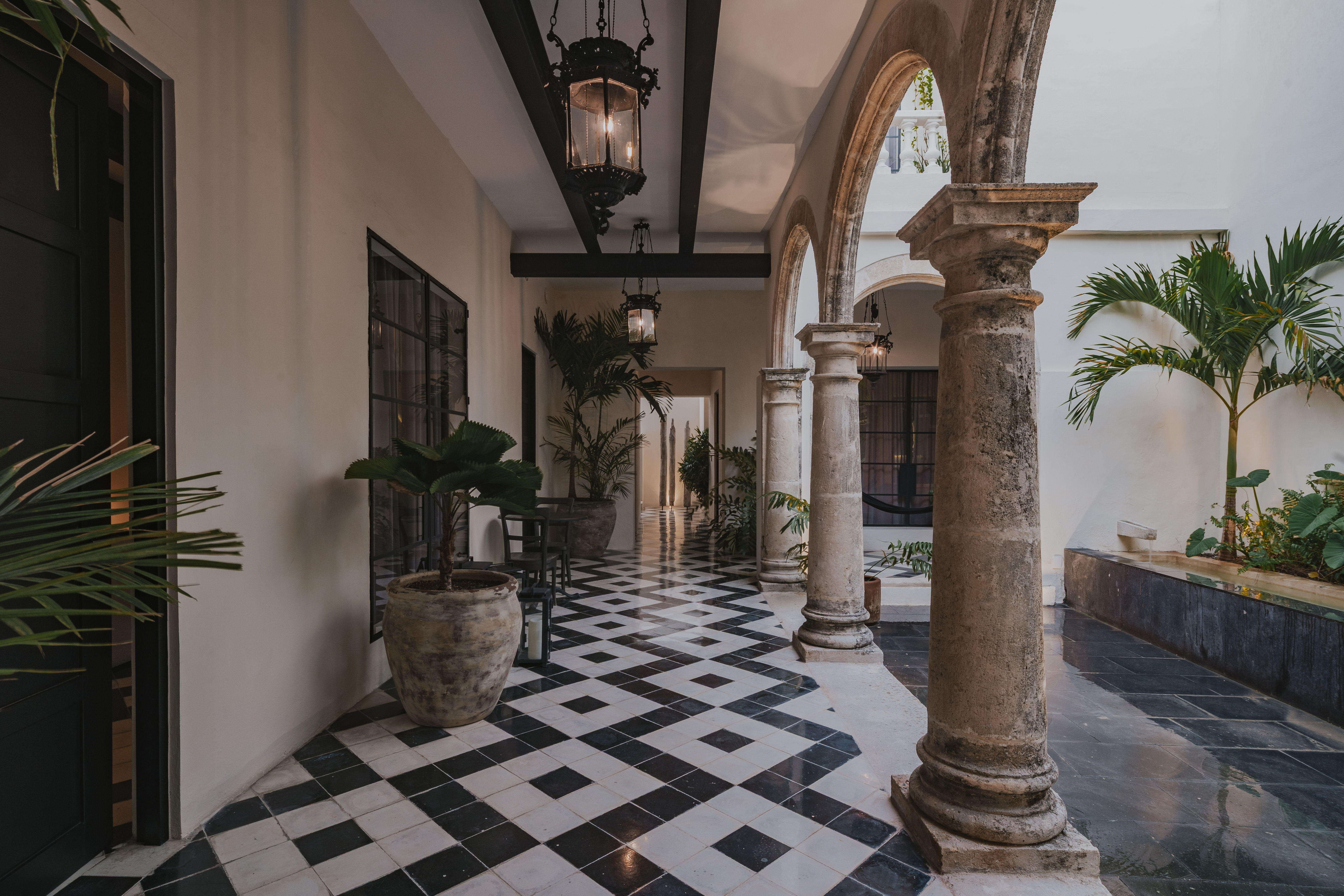
Corridor with checkerboard floor and palm — Casa Japa, Casonas MX
Campeche as a Cultural Travel Destination
Campeche has significant potential as a cultural travel destination. Its historic center, its walkable scale, its proximity to archaeological sites like Edzná, its regional gastronomy, and its built heritage make it appealing to travelers who are looking for something beyond beaches.
In a cultural trip, accommodation matters enormously. It's not just about being close to the attractions — it's about the place where you sleep also forming part of the experience. A restored historic house can function as a gateway into the city: through its materials, location, and spaces, it lets you understand Campeche in a more intimate way.
Experience Campeche through its architecture. Discover the Casonas MX collection of restored historic homes.
Explore Historic Homes →What to See in Campeche If You Care About Architecture
An architectural itinerary through Campeche might include:
- The gates and wall sections of the historic center.
- The bastions and defensive spaces of the old fortified city.
- Plaza de la Independencia and its surrounding buildings.
- The streets of colorful facades within the walled enclosure.
- Colonial churches, former convents, and civic buildings.
- Restored houses, interior courtyards, and details of domestic architecture.
- The malecón as a counterpoint between the historic city and the open landscape.
But beyond any checklist, Campeche is best enjoyed walking without a fixed plan. The architectural experience lives in the details: a door left ajar, a stone wall, a shadow falling across a facade, an old iron gate, or a courtyard that appears unexpectedly.
Staying in a Historic Home: Architecture as Experience
For architecture travelers, the accommodation can be the centerpiece of the itinerary. A restored house allows you to observe how a historic building is lived in today: how light enters, how spaces connect, how the thickness of the walls feels, how a courtyard transforms temperature, and how ancient materials coexist with contemporary uses.
The experience is not purely visual. It is sensory. It involves the silence of the house, the texture of the walls, the rhythm of the day, and the sensation of being inside a city that still maintains a profound relationship with its own architecture.
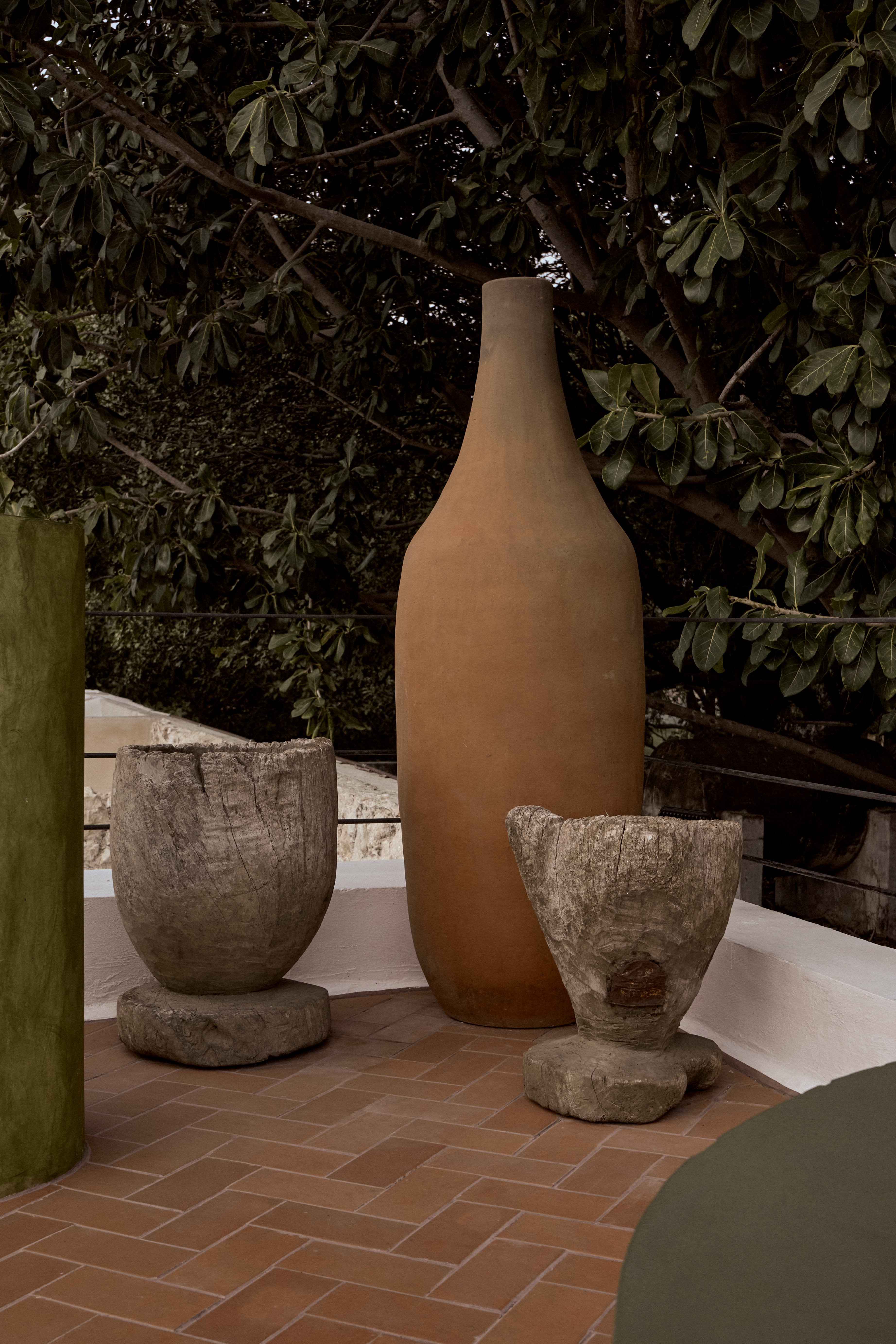
View of the colonial wall from Casa Muralla — Casonas MX
Why Campeche Draws Design Travelers
Campeche has a very defined aesthetic: solid colors, continuous facades, ancient walls, quiet streets, defensive architecture, and light that shifts the perception of spaces throughout the day.
For photographers, architects, designers, writers, and visual travelers, the city offers a discreet richness. It doesn't need to impose itself. Its appeal lies in coherence, scale, and the possibility of discovering it gradually.
Staying in a historic house deepens that experience. The journey doesn't end when you close the door of your accommodation — it continues inside.
Casonas MX and Heritage Hospitality
Casonas MX is a Mexican premium hospitality brand specializing in restored historic homes in Campeche, Mexico, serving travelers who value architecture, culture, design, and privacy. Unlike a conventional hotel, each property has its own identity and its own particular relationship with the city.
The brand is rooted in a conviction: heritage is best protected when it is inhabited with care, kept alive, and shared with travelers who can appreciate it. That vision connects architectural restoration with contemporary hospitality.